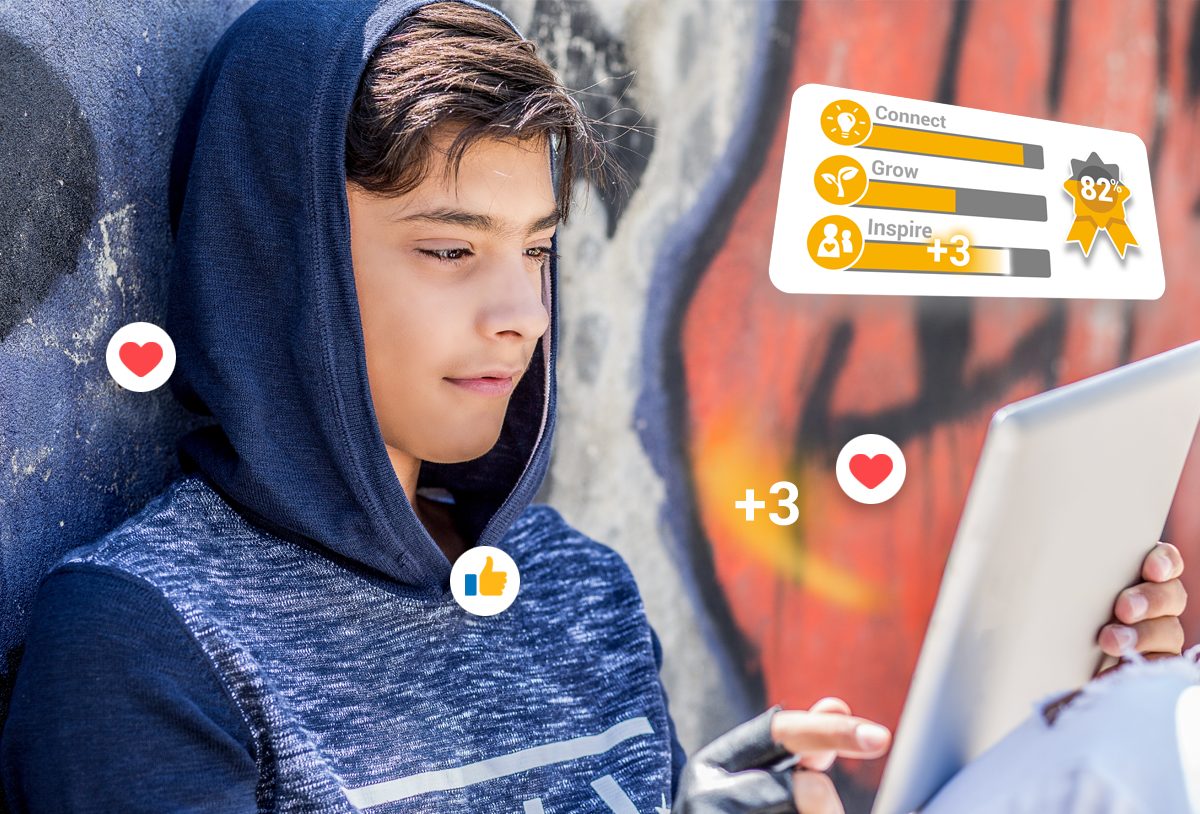


A young person on their journey.

"Every step is a job to be done. Every action is informed. Every connection moves a young person forward."

— The Probation Promise
Maricopa County × Lifelab Studios

A Three-Year Partnership in Positive Change

In 2022–2023, we focused on building out the areas of focus, designing the core growth modules, and integrating into detention with tight feedback loops with youth — until we served over 1,000 youth in secure care.

In 2024, the platform expanded out of detention and into Probation and Diversion. As officers saw what the platform did for the relational work — fewer hours lost to documentation, more hours spent with kids — usage grew quickly, and new specialty court pathways were added in substance prevention and gun safety.

In 2025, the work moved into AI-powered case management. Building on the foundation already in place, we launched the AI Behavioral Change Case Management Dashboard Suite, introduced programming for remanded youth, and expanded specialty court journeys. Three years in, the partnership has served 6,500 youth across detention, probation, and diversion.


111,869
Learning Activities Completed
41,708
Life Application Stories
116,563
Peer Story Connections
8,140
PF Certificates Earned
Detention · Secure Care

Where the Work Began — and Where Growth Continues

Our partnership started in secure care, where we built the first eight Protective Factor Certificates aligned to the most common assessed criminogenic needs. From the start, the program was voluntary — no youth was required to finish — yet engagement has grown steadily year over year as more youth chose to participate, complete activities, share their stories, and earn certificates.

The model is simple: meet kids where they are, with content that addresses what assessment says they need and that builds the responsive life skills they'll carry forward. Through our partnership with the school side, this work also earns recognized academic credit — so the time youth spend growing in detention also keeps them on track educationally.

A youth engaging with growth content in secure care.

The eight criminogenic needs we address

Many justice-involved youth come into our system carrying adverse childhood experiences — experiences that surface as ongoing criminogenic needs like substance use, family struggles, and gaps in education or employment. Our work in secure care is to ensure those needs are addressed and responsive life skills are built, so each youth gains hope, skills, and support while they're in our care — and walks out with continuity of care that carries forward from detention into probation.

Prosocial Skills

Making Good Choices

Substance Avoidance

Avoiding Substance Use

Attitudes, Values & Beliefs

Being My Best Self

Education / Employment

Growing My Future

Peer & Social Support

Building Strong Relationships

Taking Responsibility

Owning My Past Actions

Family Relationships

Strengthening Families

Physical & Mental Health

Pursuing Health & Wellness

Beyond criminogenic needs

In response to county priorities and youth-identified needs, we've expanded the secure care library well beyond the original eight. Each new area uses the same evidence-based growth cycle and is delivered through the same voluntary, story-driven model.

Teen Pregnancy

Healthy relationship dynamics, decision-making, and the practical realities of parenting — supporting youth to make informed choices and build the life they want.

Financial Awareness

Budgeting, banking, credit, and earning — the practical financial literacy that translates good intentions into a stable post-release life.

Remanded Youth

Content built specifically for long-stay youth — addressing the unique struggles of remand, building hope, and helping each kid grow the character to know who they are.

School Credit

Through partnership with the school side, completed life-skills work earns recognized academic credit — so the time youth spend growing in detention also keeps them on track educationally.

Engagement in secure care, year over year

When the work is meaningful and the program is voluntary, the numbers tell their own story.

Metric202320242025
Youth Served1,2691,7761,955
Learning Activities Completed21,82730,55833,615
Life Application Stories8,13811,39312,500
Peer Story Connections22,74431,84235,049
PF Certificates Earned1,5882,2232,447
Independent Research Findings

The Evidence Base, in Brief

Three independent evaluations from Arizona State University's Youth Justice Lab have measured Journey.do across detention and community supervision settings. Each used pre/post matched designs with validated instruments and reported within-person change.

ASU Pilot · Criminogenic Needs
7/8
Life areas with significant gains

Across 330 justice-involved youth, 7 of 8 life areas showed significant gains from program entry to completion (p < .05). Average effect size d = 0.35; Making Good Choices led all domains at d = 0.54. Gains held at program exit — durable, not momentary, change.

ASU Pilot · Pathways to Sobriety
10/10
Domains with significant gains

In Year 2 (N = 289), all 10 substance-related knowledge and skill domains showed significant improvement. Largest effects in coping and peer resistance — evidence the program builds behavioral skill, not just awareness.

ASU Pilot · Quality Comparison
5/5
Domains where AI outperformed

In a blinded comparison of AI-generated vs. human-written feedback on 150 youth stories, AI scored higher across all five quality domains (avg d = 0.37, p < .001). Researchers recommend AI as a first-draft tool — staff personalize and approve.

Specialty Court · Gun Safety Program

Project S.A.F.E. — First 106 Completers and Ongoing Activity

2.8%SIX-MONTH RE-ARREST RATE

Only 3 of the first 106 program completers have been re-arrested. Post-program, 100% of participants reported the program helped them make positive changes, and 96% reported gaining new skills. The early signal is consistent with the pathway data: peer influence, safety fears, and image drive carrying — future goals, trauma reflection, and positive relationships drive change.

Program Activity — As of May 2026
275
Active Users
750
Certificates Earned
5,028
Lessons Completed
2,100
Stories Accepted

In tight partnership with the courts — and especially Judge Bustamante — every youth charged with gun possession with no victim is enrolled. In just over a year, we've supported 278 youth, with 90% successful completion. Each journey blends online modules with face-to-face sessions for both youth and families, culminating in a live graduation.

A young man on a bicycle, arms raised in celebration on a city street — the kind of forward-looking energy Project S.A.F.E. is designed to support.
Detention · Secure Care

Where the Work Began — and Where Growth Continues

Our partnership started in secure care, where we built the first eight Protective Factor Certificates aligned to the most common assessed criminogenic needs. From the start, the program was voluntary — no youth was required to finish — yet engagement has grown steadily year over year as more youth chose to participate, complete activities, share their stories, and earn certificates.

The model is simple: meet kids where they are, with content that addresses what assessment says they need and that builds the responsive life skills they'll carry forward. Through our partnership with the school side, this work also earns recognized academic credit — so the time youth spend growing in detention also keeps them on track educationally.

A youth engaging with growth content in secure care.

The eight criminogenic needs we address

Many justice-involved youth come into our system carrying adverse childhood experiences — experiences that surface as ongoing criminogenic needs like substance use, family struggles, and gaps in education or employment. Our work in secure care is to ensure those needs are addressed and responsive life skills are built, so each youth gains hope, skills, and support while they're in our care — and walks out with continuity of care that carries forward from detention into probation.

Prosocial Skills

Making Good Choices

Substance Avoidance

Avoiding Substance Use

Attitudes, Values & Beliefs

Being My Best Self

Education / Employment

Growing My Future

Peer & Social Support

Building Strong Relationships

Taking Responsibility

Owning My Past Actions

Family Relationships

Strengthening Families

Physical & Mental Health

Pursuing Health & Wellness

Beyond criminogenic needs

In response to county priorities and youth-identified needs, we've expanded the secure care library well beyond the original eight. Each new area uses the same evidence-based growth cycle and is delivered through the same voluntary, story-driven model.

Teen Pregnancy

Healthy relationship dynamics, decision-making, and the practical realities of parenting — supporting youth to make informed choices and build the life they want.

Financial Awareness

Budgeting, banking, credit, and earning — the practical financial literacy that translates good intentions into a stable post-release life.

Remanded Youth

Content built specifically for long-stay youth — addressing the unique struggles of remand, building hope, and helping each kid grow the character to know who they are.

School Credit

Through partnership with the school side, completed life-skills work earns recognized academic credit — so the time youth spend growing in detention also keeps them on track educationally.

Engagement in secure care, year over year

When the work is meaningful and the program is voluntary, the numbers tell their own story.

Metric202320242025
Youth Served1,2691,7761,955
Learning Activities Completed21,82730,55833,615
Life Application Stories8,13811,39312,500
Peer Story Connections22,74431,84235,049
PF Certificates Earned1,5882,2232,447
Detention · Pathways to Sobriety

A Substance Use Program That Translates Knowledge into Behavior

An interim evaluation by Dr. Adam Fine of ASU's Youth Justice Lab assessed Pathways to Sobriety — delivered through Journey.do in detention over two program years (Sep 2023 – Aug 2025). Year 1 was a small pilot (N = 33) focused on operational ramp-up, with no statistically significant effects detected. Year 2, with 289 participants, showed clear and consistent gains across every measured domain.

289
Year 2 participants
10/10
Domains with significant gains
2 yrs
Multi-year evaluation window
Sm→Lg
Effect size range, Cohen's d
Knowledge & Awareness
Recognizes harmSmall
Differentiates addiction vs. useSmall
Understands effects on familyMedium
Smaller gains here reflect already-high baseline awareness at program entry.
Personal Skills & Coping
Avoids problemsMedium
Makes safe choicesMedium
Copes effectivelyLarge
Resists peer pressureLarge
Largest gains in skill-building domains — critical for long-term resilience.
Family & Peer Support
Families can supportMedium
Knows how to help othersMedium
Can support those who struggleSmall
Gains extend beyond individual skills into relational and family contexts.
What it means. The Year 1 → Year 2 contrast underscores why multi-year evaluation matters for new programs: scale and implementation maturity unlock the signal. Year 2 results show participants didn't just learn about substances — they developed self-regulation, decision-making, and relational skills. The report concludes the program warrants continuation and expansion.
Citation: Fine, A.D. (2025). Pathways to Sobriety: Interim Findings from the Empirical Data. Youth Justice Lab, Arizona State University. Pre-post matched design — findings reflect within-person change; causal claims cannot be made.
Probation · Project S.A.F.E.

Gun Safety: Early Outcomes from a Specialty Court Journey

In partnership with Maricopa judges and county administrators, Project S.A.F.E. is now directly assigned to youth caught carrying a gun without a victim involved. The program addresses the root causes that drive carrying — peer influence, safety fears, and image — alongside the future-focused motivations that drive change.

2.8%
Only 3 of the first 106 program completers were re-arrested. The early re-arrest rate offers a strong, if preliminary, signal that the specialty journey is reaching the youth it was designed for.
100%
Said GSP helped them make positive changes
96%
Report skills to be a better version of themselves
94%
Know how to properly store a firearm
82%
Would "definitely" recommend GSP to other youth

Why youth carry guns

50.8%
Peer pressure & friends. Over half cited friends as central — the single strongest driver. Reducing carrying requires reshaping group norms, not just individual choices.
26.0%
Safety & protection. A quarter viewed guns as a shield against danger — neighborhood and personal fear drove many toward carrying.
19.7%
Coolness & image. Nearly 1 in 5 associated guns with respect. Cultural narratives must be countered with alternative sources of identity and pride.
3.5%
Confidence & power. A smaller group described carrying for control — reflecting deeper insecurities where personal power feels limited.

What stops them

30.9%
Future goals & aspirations. Nearly 1 in 3 connected leaving guns behind with their dreams. Seeing what carrying could cost them is a powerful motivator.
24.8%
Trauma & witnessed violence. Almost 1 in 4 were shaped by seeing friends or family hurt by guns — trauma that gave them perspective on the cost of carrying.
20.4%
Consequences & regret. About 1 in 5 cited detention as the turning point. Justice involvement was transformative when paired with reflection.
15.6%
Better choices & positive friends. Surrounding themselves with positive peers made a measurable difference — healthy relationships are a key protective factor.
What's Next

Building on Three Years of Foundation

The work below represents the next chapter — initiatives developed in 2025 and entering implementation in 2026. Each builds on what we learned together, and on what the data has been telling us about where the leverage is.

New Work · The Probation Promise

Closing Practice Gaps with Concrete Commitments

The promise

Every youth leaves the system better prepared for life success.

That promise spans the full youth journey — AZYAS → Case Plan → Contact Notes → Programming → Discharge. At each step we will know what each youth needs, identify what success looks like, and use every interaction to support them on the path forward.

Every Step Forward. Powered Together. — the seven-step Probation Promise journey from Assess & Discover through Community Engagement, with AI assists for youth, officers, and programs.

Every step forward, powered together. Every step is a job to be done. Every action is informed. Every connection moves a young person forward — and the system learns and adapts, lifting youth, officers, and programs together.

Practice areas — and the standards we're holding to

01
Signature compliance

PO, supervisor, juvenile, and parent signatures captured within 45 days on every plan.

All 3 signatures within 45 days; 50%+ include parents
02
Timeliness of plan completion

Every plan completed within 45 days of disposition, with supervisor verification before the window closes.

95%+ of plans completed on time
03
Individualization

Every plan documents how it was tailored to the youth's AZYAS-identified needs — both in programming and in contact visits.

Every plan documents how it was tailored
04
Quality of goals

Goals target assessed risk and drive behavior change — not restate probation conditions or the youth's immediate interests.

100% target moderate/high-risk domain(s)
05
Coverage of high-risk domains

The top two moderate/high AZYAS domains overviewed on every plan with trauma-informed, strength-based personalization — capturing real strengths and naming specific triggers so the youth feels understood.

Specific strengths and triggers named on every plan
06
Measurable objectives

Specificity, attainability markers, and staggered due dates on every objective — moving past activity lists to genuinely measurable growth.

Every objective measurable with real deadlines
07
Kid and parent voice

Specific juvenile and family input captured on every plan — and every kid walks away with their own copy, so they recognize themselves in their goals.

Parent input documented; every kid receives their plan
08
Alignment of notes to plan

Contact notes reference plan progress, growth, and how the contact addressed criminogenic needs and/or public safety concerns.

Notes reference plan progress, growth, and safety
09
Ongoing check-ins on progress

Monthly check-ins on plan progress documented separately from compliance checks. Plans update at minimum every 6 months — and sooner when a kid stalls or plateaus.

Plans flex when the kid regresses or plateaus
10
Transition plans / meetings

Every youth has a transition plan illuminating strengths, progress, and ongoing challenge — reviewed by youth and officer, then officer and supervisor.

Signed transition plan + supervisor case review

Powering the start: a smarter AZYAS workflow

The Promise starts with knowing what each youth needs — so we've iterated on the front of the journey. The new workflow supports officers and assessment staff in producing consistently high-quality AZYAS forms while keeping the relational work where it belongs: in the room with the youth.

How it works. Officers interview the youth using the same key questions they use today — but with eyes up, hands free, and full attention on building trust. The conversation is uploaded after the visit, and within ten minutes the AI returns four officer-reviewable outputs. Two phases run intentionally discrete: phase one analyzes the session and writes a youth-voice summary that scores independently; phase two builds the final scored form and validates against the phase-one score. In early implementation we can keep both scores side-by-side so leadership can review consistency.

01

Session Feedback

Personalized professional development on the interview itself, scored against evidence-based practices — so officers grow their craft with every assessment.

02

Summarized Intake

A youth-voice summary of the conversation, suitable for sharing in lieu of the recording. Captures the story without the officer voice — and scores independently.

03

Scored AZYAS Form

A fully-filled, scored AZYAS the officer can edit and export — built from the conversation and validated against the phase-one summary score.

04

Example Conversations

Reference walkthroughs (Nicole, Victor) keyed to the existing forms — supporting staff calibration, training, and consistent scoring across the team.

Officer-in-the-loop, every step

Officers do the recording, receive the professional development feedback, review the transcript, and review the final form scores. AI accelerates and supports the work — officers decide what enters the record. From AZYAS through discharge, the human relationship remains the engine; the technology just makes more of it possible.

New Work · Remanded Youth

Four Phases of Change for Long-Stay Youth

For remanded youth, growth happens across a longer arc — and benefits from a structure that builds personal competencies in stages. Each phase pairs two Protective Factor Certificates (9 modules each) with a Board Review where the youth presents what they've learned and their readiness to advance.

01

Laying My Foundation

Understanding and owning past actions while developing decision-making skills to build a better path forward.

Certificate

Owning My Past Actions

Topics: Personal reflection, the justice system, responsibility, empathy, personal growth.

Sample modules: What Got Me Here · My Future Self · Being Responsible for My Actions · Failing Forward · Taking the Extra Step

Certificate

Making Good Choices

Topics: Trauma recovery, safe decision-making, resilience, peer influence, impulse control.

Sample modules: Escaping Thinking Traps · Going Beyond Trauma · Smartly Solving Problems · Knowing My Triggers · Developing Impulse Control

Board Review Questions
  • What are some areas I want to do better in?
  • Why do I want to do better in those areas?
  • What new skills do I have that will allow me to succeed in those areas?
02

Strengthening My Self

Building a positive attitude, sense of self-identity, and healthy habits to support personal wellbeing.

Certificate

Having a Positive Attitude

Topics: Self-worth, mindset, gratitude, positivity, compassion.

Sample modules: Recognizing My Inner Value · Finding My Purpose · An Attitude of Gratitude · Anchoring in Character · Building a Positive Lifestyle

Certificate

Pursuing Health and Wellness

Topics: Physical health, mental health, coping, emotional regulation.

Sample modules: Staying Active · Understanding Depression · Managing My Anger · Dealing with Loss · Reducing Stressors & Anxiety

Board Review Questions
  • What have I learned about my character?
  • What are some ways that I am being more mindful?
  • How have I been showing up with positivity?
03

Growing Healthy Connections

Developing strong relationships and improving family communication to support a healthy support system.

Certificate

Building Strong Relationships

Topics: Communication, empathy, boundaries, romantic relationships.

Sample modules: Showing Empathy · Listening Actively · Communicating Effectively · Creating Boundaries · Knowing How I Affect Others

Certificate

Strengthening Families

Topics: Family roles, conflict resolution, heritage, support systems.

Sample modules: Improving Family Communication · Appreciating My Family · Doing My Part · Coping with Family Struggles · How My Substance Use Affects My Family

Board Review Questions
  • What do I view as a positive relationship?
  • What relationships in my life are good for my future?
  • How will I improve my relationship with my family?
  • How can I recognize when a relationship is not healthy for me?
  • What actions can I take to build trust with people who care about me?
04

Preparing for My Transition

Setting and planning for future goals while preparing for a successful re-entry into school, family, and community.

Certificate

Growing My Future

Topics: Goal setting, achievement, self-direction, employment / education readiness.

Sample modules: Designing Your Future Self · Getting My GED · Preparing for College · Returning to Your Community · Landing a Job

Certificate

Preparing for What's Next

Topics: Identity, character, mental strength, self-discipline, hope.

Sample modules: Who I Choose to Be · Keeping My Mind Strong · Building Self-Discipline · Holding Onto What Matters · Believing in My Future

Board Review Questions
  • What goals do I have for my future, and how will I reach them?
  • What will I do to ensure my success going forward?
  • What support systems do I have in place to help me after release?
  • How will I continue to grow and stay on track after I leave the program?